Why Row

Why Rowing Changes People

It is the most complete workout in sport, the closest thing to meditation with a heart rate, and the fastest way to build friendships that last decades. Here is what rowing does to the body, the mind and the spirit — and why, once a rower, always a rower.

The short answer

One sport, three transformations

Rowing is a full-body, low-impact endurance sport practiced in a boat that only moves when everyone in it moves together. That single sentence explains almost everything people love about it — and everything the research keeps confirming.

The Body

Nine muscle groups, zero pounding.

  • A rowing stroke recruits roughly 86% of the body's muscles — legs, hips, core, back, shoulders and arms in one continuous chain.
  • It is low-impact: the feet never leave the footplate, so knees, hips and ankles are spared the repeated loading of running.
  • Steady-state rowing sits in the aerobic zone that raises VO₂ max, lowers resting heart rate and improves blood-pressure control.
  • Because the drive is a hip-hinge under load, rowers build posterior-chain strength and spinal endurance that carry into everyday life.

The Mind

Rhythm is the oldest form of focus.

  • Rhythmic, bilateral movement plus long exhalations engage the parasympathetic nervous system — the physiological opposite of stress.
  • Aerobic exercise increases BDNF, the protein tied to learning, memory and mood; rowing delivers it in 60-minute doses.
  • The stroke is a closed loop of feedback: catch, drive, finish, recover. Attention has nowhere to wander, which is why rowers describe practice as meditation with a heart rate.
  • Sunrise water time adds bright morning light exposure, which anchors circadian rhythm and sleep quality.

The Spirit

You cannot fake a boat that moves well.

  • An eight only runs when eight people surrender a little ego to a shared rhythm — a rare, teachable humility.
  • Rowing rewards patience: technique compounds over seasons, not sessions, and that changes how a person meets hard things ashore.
  • The sport is honest. The water gives immediate, unsentimental feedback, and there is deep satisfaction in earning speed rather than talking about it.
  • Dawn on Lake Wylie — mist, herons, a flat sheet of water — is its own reason. Many members came for fitness and stayed for that.
Backed by research

The science, briefly

We are a rowing club, not a lab — but the claims rowers make about this sport hold up remarkably well when someone bothers to measure them.

~86%

of the body's musculature is engaged in a single rowing stroke

American Fitness Professionals & Associates / USRowing coaching education

Lowest

injury rate per hour among endurance sports for non-elite adults, thanks to a seated, non-weight-bearing stroke

Sports Medicine reviews of rowing injury epidemiology

+VO₂ max

Masters rowers show aerobic capacity and bone-mineral density well above age-matched sedentary adults

Journal of Aging and Physical Activity; British Journal of Sports Medicine masters-athlete studies

Higher pain threshold

Rowers training as a crew showed greater endorphin-linked pain tolerance than the same rowers training alone

Cohen, Ejsmond-Frey, Knight & Dunbar, Biology Letters (2010), University of Oxford

Synchrony effect

Moving in time with others increases trust, cooperation and felt closeness — the measurable mechanism behind crew bonds

Psychological Science research on interpersonal synchrony and social bonding

Longevity

Sustained club-level rowing is associated with lower all-cause mortality; social connection is an independent predictor of a longer life

Harvard Study of Adult Development; large-scale cohort studies on exercise and social ties

Camaraderie

Eight people, one heartbeat

Ask a rower what kept them in the sport and almost nobody says fitness. They say the crew.

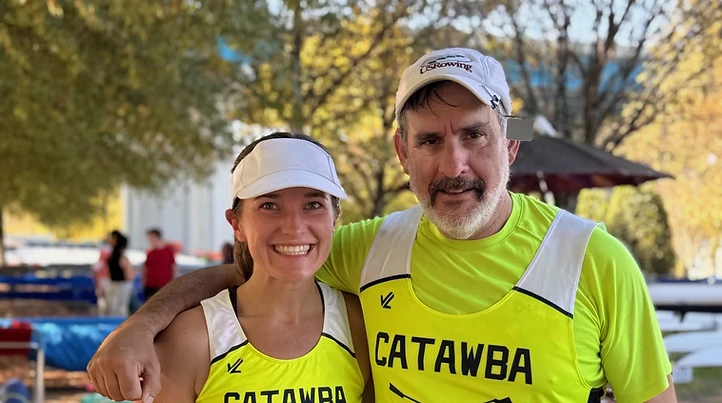
CYC crewmates after a race

Rowing is the only sport where the athletes face backwards, cannot speak, and still have to agree — stroke after stroke — on exactly when to apply force. There is no ball to hide behind and no individual highlight. A boat either runs together or it does not run at all.

That constraint builds an unusual kind of friendship. You learn a crewmate's rhythm before you learn what they do for a living. You know how they breathe at 32 strokes a minute, how they hold a bad piece together, whether they lift the boat off the trailer without being asked. Trust in a crew is built out of thousands of small, wordless reliabilities.

Oxford researchers put rowers on ergs alone and then as a crew and measured pain tolerance afterwards. Rowing together raised it well beyond rowing alone — the physiological signature of an endorphin-driven social bond. Every rower already knew this; science just confirmed why the 5:30 a.m. alarm feels less like a chore when six other people are counting on you to answer it.

At Catawba Yacht Club that shows up on the dock at first light, in the coffee afterwards, in the trailer loaded at midnight before Chattanooga, and in members who have shared the same launch for twenty-five years.

Two kinds of rower, one dock

Whether you race or you don't

Catawba Yacht Club was built for both — the competitors who still want a bow ball in front of someone else's, and the rowers who simply want the best hour of the day.

For the competitive spirit
Still racing

For the competitive spirit

Some of us never let it go. Head of the Charles in October, Head of the Hooch in November, sprints through the spring and summer, and a training plan that actually has phases. Masters racing is age-handicapped, which means a 58-year-old and a 32-year-old can line up in the same event and both have something real to fight for. Bring your collegiate PRs, your erg scores and your grudges — there is a seat and a season waiting.

See our racing calendar
For the whole-body workout
Rowing for life

For the whole-body workout

And some of us just want the best hour of the day. No entry fees, no lineup politics — a full-body, joint-friendly workout on flat water, three to seven mornings a week, with people who are glad you showed up. Recreational rowers at CYC scull singles and doubles, take a seat in the club eight, use the erg room through winter, and get every bit of the cardiovascular, strength and mental-health benefit the racers do.

Start with Learn to Row
Once a rower, always a rower

The stroke never really leaves you

Rowing is stored in procedural memory — and in who you became while learning it.

Ask anyone who rowed in college what happens the first time they sit in a boat twenty years later. The hands remember. The catch timing comes back within a few hundred meters. The smell of lake water at 6 a.m. does something to the chest that is hard to explain to a non-rower.

There is a reason for that. Rowing is learned as one long, repeated motor pattern — tens of thousands of identical strokes — and patterns drilled that deeply become procedural memory, the same durable storage that keeps a cyclist upright. Layer on the emotional weight of the hours it cost you, and the memory is stored twice: in the muscles and in who you became while building them.

Rowing is also one of the very few competitive sports you can genuinely do for life. The stroke is seated and low-impact, the effort is entirely self-selected, and masters racing categories run past 80. Nobody has to retire at 22. Our own boats carry former collegiate oarsmen, adults who learned to scull in their fifties, and members racing faster now than they did a decade ago.

Once a rower, always a rower. If you have been away from the water, this is your invitation back. If you have never touched an oar, it is not too late — most of our crew started as adults.
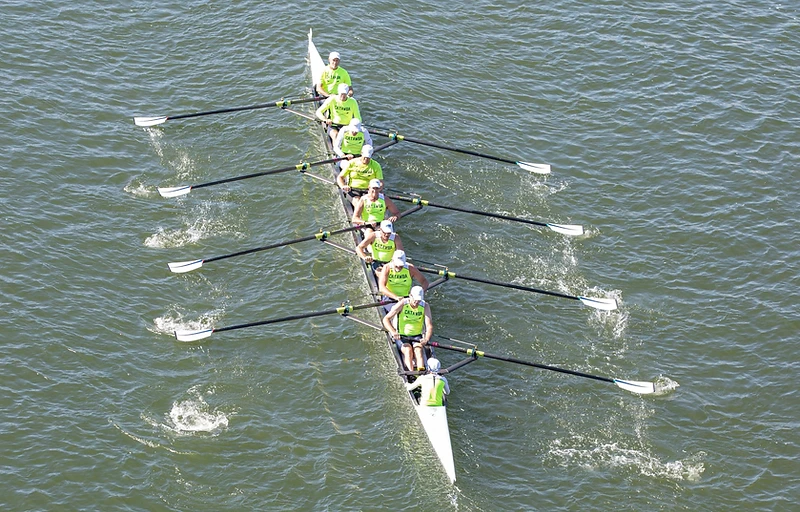
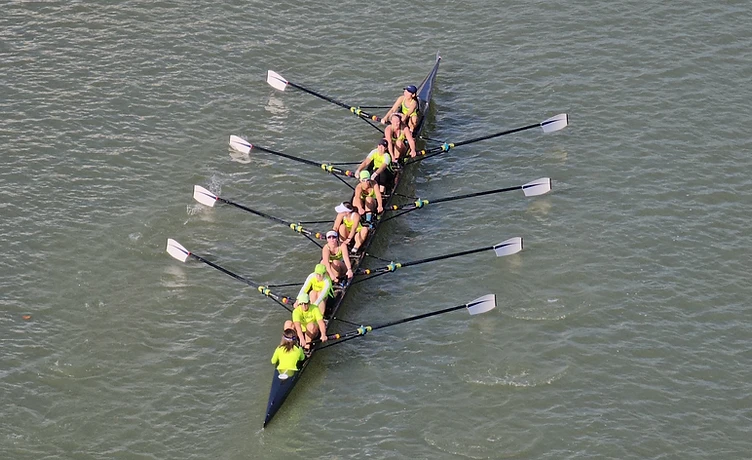
A CYC eight racing at the Head of the Hooch
Common questions

Rowing, answered

The questions we hear most often from prospective members, from complete beginners to former collegiate oarsmen.

The water is flat at sunrise. Come find out for yourself.

Masters rowing on Lake Wylie since 1991 — beginners coached from their first stroke, racers pointed at Boston and Chattanooga, and a dock full of people glad you showed up.