Check the weather. Know the pattern. Row defensively.
Everything a rower needs before launching from the CYC docks: forecasts, the Lake Wylie traffic pattern and the club's safety protocols.
Water & wind at the club
Basic rules of traffic on Lake Wylie
- Traffic flows like car traffic on a road. When passing oncoming (bow-facing) traffic, keep oncoming craft on your port side.
- When approaching coves beware of blind spots. Craft may be exiting the cove mouth and not see you. Navigate wide of the cove mouth.
- If turning into a cove, stay wide of the shoreline to spot craft hidden at the entrance.
- Always assume other craft can not see you. Row defensively.
- Watch for hazards such as floating debris, buoys, shallow water near shore and sandbars.
See also the USRowing Safety Guidelines (PDF) and USRowing.

Launches, club rows and self-organized rows
Sometimes a coach or safety boat volunteers for the weekend organized rows; when this occurs the launch is likely near some boats but unlikely to be near all. Self-organized rows may choose to employ a launch. To protect rowers and equipment, launch drivers must be approved — currently all USRowing-certified coaches. You may be added by taking a boating safety course and demonstrating safe operation to the Rowing Captain or CYR Head Coach.
A club-organized row is held each Saturday and Sunday morning and some holidays. A self-organized row is any other row of one or more rowers and boats.
For the person calling a club-organized row
- 1.Check the weather prior to launch and only launch when safe as outlined by USRowing.
- 2.Assign crews to boats inclusive of any safety considerations.
- 3.Verify the return of all boats prior to leaving (a crew declaring an extended-duration row arranges its own return monitoring).
For all rowers and support persons (cox, coach, launch driver)
- 1.View the USRowing safety video each year.
- 2.Maintain current registration on USRowing, including waiver.
- 3.By signing up to row you certify you can swim to USRowing minimums: float and/or tread water for ten minutes and put on a life jacket while floating. If not, you must wear a PFD.
- 4.Sign up to row.
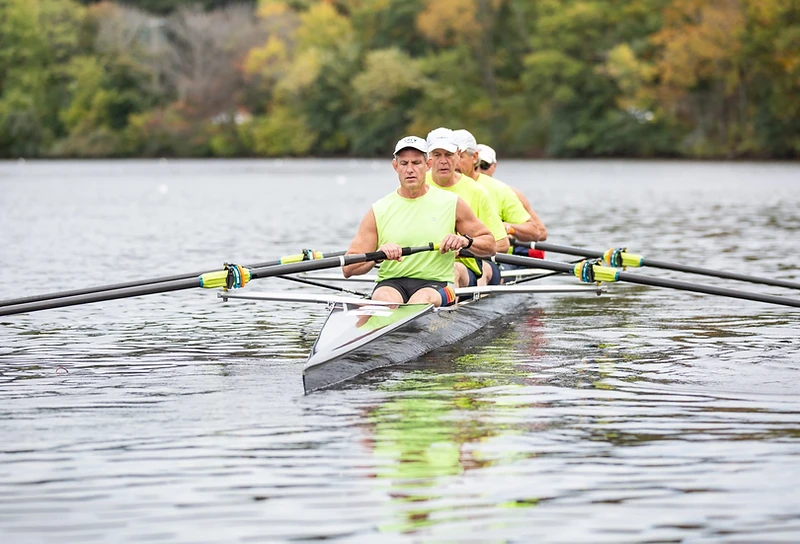
- 5.Wear proper rowing attire for the weather, including hi-viz.
- 6.Check your rowing station for proper heel-ties and secure hardware.
- 7.Study the rowing site map; know emergency egress and shelter options. Consider wind direction and speed in your route.
- 8.Know and practice the traffic pattern.
- 9.Recommended: carry a phone in a waterproof case, a bow mirror, a whistle or horn, and row in a group rather than a single boat.
- 10.Report any safety concerns or violations to the Rowing Captain and the Safety Officer immediately.
Additional requirements for self-organized rows
- 1.Be approved to lead or participate by a USRowing-certified coach (a novice may qualify only with experienced rowers).
- 2.Check the weather prior to launch and only launch when safe.
- 3.Engage someone to monitor your return and what action to take if you don't return by a certain time.
- 4.In or near dark or diminished visibility, use bow and stern lights.
Additional requirements for a self-organized row in a single
- 1.Take a PFD with you.
- 2.Recommended: go out with another boat capable of your rescue.
- 3.Pass a flip-test witnessed by a USRowing-certified coach — required if going solo.
- 4.Abide by the 4-oar rule cold-weather restrictions — required for club 1x and 2- boats.
- 5.Recommended: wear your PFD.